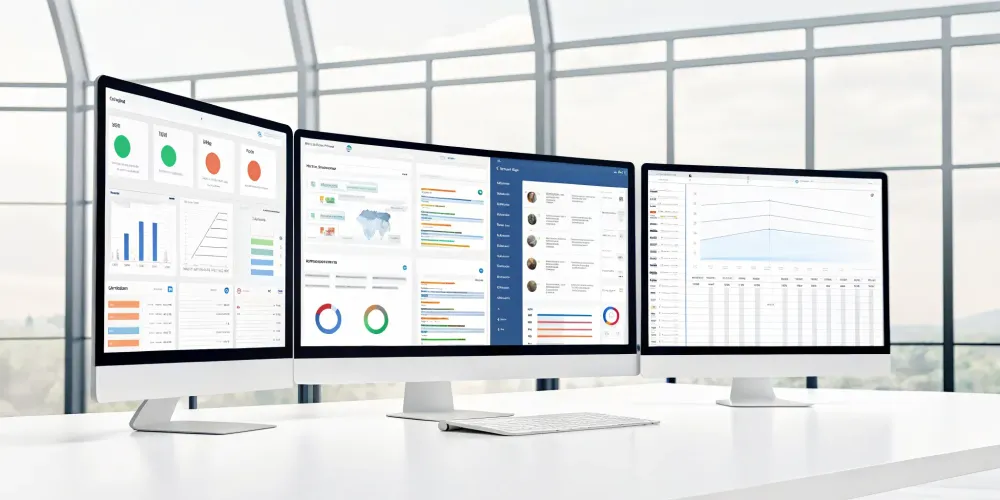
In today's software landscape, artificial intelligence is no longer a futuristic add-on; it's a core expectation. Users want intelligent, automated, and personalized experiences, and the most successful platforms are built to deliver them from the ground up. This means that a modern SaaS project must be an AI-powered project. Integrating AI impacts every decision, from choosing your tech stack and planning your features to structuring your engineering team for continuous innovation. This guide explores how to move beyond basic cloud hosting and build a truly intelligent application that solves deeper problems, automates complex workflows, and creates a significant competitive advantage in your market.
Key Takeaways
- Shift from a product to a service: The SaaS model creates predictable, recurring revenue and simplifies updates. This approach focuses on long-term customer relationships and continuous value delivery instead of a single transaction.
- Prioritize a focused launch strategy: Start by solving a specific problem for a niche audience with a Minimum Viable Product (MVP). This allows you to get to market faster, gather real user feedback, and build a loyal customer base before expanding.
- Integrate modern tech from day one: Users now expect intelligent and secure software. Plan for AI integration early to automate workflows and personalize experiences, giving your product a critical competitive edge right from the start.
What Exactly Is a SaaS Project?
At its core, a SaaS project involves building software that is delivered to users over the internet. SaaS, which stands for Software as a Service, flips the traditional software model on its head. Instead of buying a license, installing a program on a specific computer, and managing updates themselves, users subscribe to a service. They can then access the application through a web browser or a dedicated app, with all the underlying infrastructure, maintenance, and updates handled by the provider.
Think of it like the difference between buying a DVD and streaming a movie on Netflix. One is a product you own and are responsible for; the other is a service you access on demand. This service-based approach is what defines a SaaS project. It’s not just about writing code; it’s about creating a continuously delivered, centrally hosted solution that solves a specific problem for a recurring fee. This model requires a different mindset, focusing on long-term user engagement, scalability, and reliable service delivery rather than a one-time sale. For engineering leaders, this means planning for ongoing development cycles, robust cloud architecture, and a seamless user experience from day one.
How SaaS Differs From Traditional Software
The biggest difference between SaaS and traditional software lies in the delivery and ownership model. With traditional software, you buy a product once, receive a license key, and install it directly onto your hardware. Your internal IT team is then responsible for all maintenance, security patches, and manual updates. If you need to add more users, you typically have to purchase more licenses and manage them individually.
SaaS, on the other hand, is a subscription service. You pay a recurring fee (usually monthly or annually) for access to the software, which is hosted online by the provider. There’s nothing to install on your end, and updates happen automatically in the background. This eliminates the need for your team to manage maintenance and ensures everyone is always using the latest version. It’s a more hands-off, scalable approach that treats software as an ongoing utility rather than a static product.
The Defining Features of a SaaS Project
Several key features distinguish a SaaS project from other types of software development. First and foremost is its reliance on cloud computing. The entire application, from the code to user data, is hosted on the provider's cloud servers. This enables the second key feature: accessibility. Users can log in and use the software from any device with an internet connection, which is a huge advantage for remote and distributed teams.
Another defining feature is the multi-tenant architecture, where a single instance of the software serves multiple customers (or "tenants"). This model allows for efficient resource use and makes it easier to roll out updates to all users simultaneously. Finally, SaaS projects are built for scalability. The architecture must be able to handle a growing number of users and data without a drop in performance, allowing your business to grow without technical limitations.
Common Approaches to SaaS Development
Building a successful SaaS product requires a strategic approach that goes beyond just writing code. Development often starts with creating a Minimum Viable Product (MVP) to test the core idea with real users and gather feedback quickly. This iterative process helps ensure you’re building something the market actually wants. From there, the focus shifts to adding features, refining the user experience, and scaling the infrastructure.
A critical part of the strategy involves choosing the right partners and technologies. Many teams adopt a collaborative approach, working closely with cloud providers and development partners to tackle complex challenges like data migration and security. When selecting tools and platforms, it’s important to prioritize flexibility and customization options. This allows you to adapt the product as user needs evolve and helps you build a solution that can stand the test of time.
What Are the Real Benefits of Building a SaaS Product?
If you're weighing your options for a new software project, the Software as a Service (SaaS) model offers some compelling advantages over traditional software. Instead of selling a one-time license for a product that users install on their own machines, you provide access to your software through a subscription. This fundamental shift changes everything from your revenue model to how you handle updates and user access. For modern teams and growing companies, these differences often translate into a more sustainable, flexible, and user-friendly product. Let's break down the key benefits you can expect when you build a SaaS solution.
Lower Costs and Predictable Revenue
One of the most attractive aspects of the SaaS model is how it reshapes your financial landscape. Traditional software often requires a significant upfront investment in licenses and infrastructure from your customers. With SaaS, that barrier to entry is much lower. Customers pay a recurring subscription fee, which makes your product more accessible and affordable. For your business, this creates a predictable, recurring revenue stream that simplifies forecasting and financial planning. You can more accurately project monthly and annual revenue, which is invaluable for managing cash flow and investing in growth. This subscription-based approach helps you build a more stable financial foundation for your product.
Access From Anywhere, on Any Device
In a world where teams are often distributed, accessibility is non-negotiable. SaaS products are typically cloud-based, meaning users can log in and get to work from any device with an internet connection. Whether your team is in the office, working from home, or on the road, they have the same seamless access to the tools they need. This flexibility is a major selling point for your customers, as it supports modern work styles and improves productivity. You’re not just selling a piece of software; you’re offering a solution that fits into the dynamic, location-independent way people work today.
Scale Your Product on Demand
Growth can be unpredictable, and your software needs to be able to keep up. The SaaS model is inherently built for scalability. As your customers' businesses grow, they can easily add more users or upgrade their plans to access new features without any friction. This on-demand scalability is a huge advantage. From a development perspective, you can design your application's architecture to handle increasing loads and feature expansions efficiently. Building a product that grows with your customers not only supports their success but also solidifies your long-term value. An experienced development partner can help you lay the right technical foundation to make scaling smooth and cost-effective.
Effortless Updates and Maintenance
With traditional software, rolling out updates and security patches can be a logistical nightmare. You have to get every user to download and install the latest version, which rarely happens uniformly. SaaS eliminates this problem entirely. Since the software is hosted centrally, you can push updates, fix bugs, and add new features seamlessly in the background. Every user is always on the latest, most secure version of your product without having to lift a finger. This not only creates a better, more consistent user experience but also significantly reduces the support and maintenance burden on your team, freeing them up to focus on building what’s next.
Common SaaS Challenges (and How to Solve Them)
Building a successful SaaS product is more than just writing code. It involves a continuous cycle of attracting users, earning their trust, and delivering a flawless experience. While the benefits are clear, the path is filled with challenges that can trip up even the most prepared teams. From standing out in a noisy market to keeping your application online and secure, every step requires a thoughtful strategy. Let's break down some of the most common hurdles and discuss practical ways to clear them.
Winning and Keeping Customers
In a subscription-based world, customer loyalty isn't a given; it has to be earned every single month. The biggest challenge is reducing churn by consistently proving your product’s value. A clunky onboarding process is one of the fastest ways to lose a new user. To solve this, focus on creating a seamless adoption experience. If your customers are migrating from another tool, you can tackle data migration challenges with a collaborative approach that involves both your team and theirs. A smooth start builds confidence and sets the stage for a long-term relationship.
Keeping User Data Safe and Compliant
Your customers are trusting you with their data, and that trust is your most valuable asset. A security breach can be catastrophic for a SaaS business, while failing to meet compliance standards like GDPR or SOC 2 can result in heavy fines. Security can't be an afterthought. As security risks become more complex, many SaaS tools are now using AI to enhance threat detection and automate compliance checks. By integrating security into every phase of development and leveraging modern tools, you can protect your users and your reputation.
Standing Out in a Crowded Market
The SaaS landscape is incredibly competitive. It can feel impossible to get noticed when you’re up against established players and a constant stream of new apps. Instead of trying to build a tool for everyone, find a specific niche and own it. Industry-specific tools, or vertical SaaS, are growing much faster than general-purpose ones because they solve a unique set of problems for a dedicated audience. This focus makes it easier to build features customers truly need and to market your product directly to the people who will benefit from it most.
Ensuring Your App Is Fast and Reliable
Nothing frustrates users more than a slow or unavailable application. They expect your service to be online and responsive 24/7. As your user base grows, maintaining performance and ensuring high availability becomes a major operational challenge. The key is to build on a scalable infrastructure from the start and implement robust monitoring to catch issues before they affect users. Having an experienced engineering team that can manage these complexities is critical. By investing in a solid technical foundation, you ensure your app remains dependable as you grow.
How AI and New Tech Can Transform Your SaaS Project
Building a successful SaaS product today means looking beyond the core features. The most innovative and durable platforms are integrating new technologies to create smarter, faster, and more secure experiences for their users. It’s not about chasing trends; it’s about solving customer problems in ways that weren’t possible a few years ago. By thoughtfully incorporating technologies like artificial intelligence, the Internet of Things (IoT), and blockchain, you can build a product that stands out and delivers real, measurable value.
These advancements are changing how we approach everything from user engagement to data security and development speed. For engineering leaders, this opens up exciting new avenues for innovation. Instead of just maintaining a product, you can build a system that learns from user behavior, automates complex tasks, and connects seamlessly with the physical world. Adopting these technologies can help you create a more powerful product and a more efficient engineering organization. Building AI-powered teams is becoming a key strategy for companies that want to lead their markets and deliver next-generation software solutions.
Automate Workflows With AI
Artificial intelligence is no longer a futuristic concept; it's a practical tool for making SaaS products more efficient and intelligent. Modern SaaS companies are embedding AI into their platforms to automate everything from customer support with intelligent chatbots to sales forecasting with predictive analytics. This isn't just about adding a flashy feature. It's about fundamentally improving the user's workflow by taking repetitive, manual tasks off their plate. By automating these processes, you free up your users to focus on higher-value work, making your product an indispensable part of their daily operations. As one report notes, AI-enabled SaaS solutions are quickly becoming the industry standard.
Personalize the User Experience
A one-size-fits-all approach doesn’t work anymore. Users expect applications to adapt to their specific needs, and AI is the key to delivering that personalized experience. By using machine learning algorithms, your SaaS product can analyze user behavior, identify patterns, and tailor the interface, content, and recommendations for each individual. This could mean highlighting the most relevant features for a new user, suggesting helpful content based on their activity, or providing unique data insights. This level of personalization makes your product feel more intuitive and valuable, which is a powerful way to increase user engagement and retention.
Connect With IoT Devices
The reach of SaaS is extending beyond the screen and into the physical world through the Internet of Things (IoT). By integrating your platform with IoT devices, you can collect real-time data from sensors, machinery, and other connected hardware. This opens up a world of possibilities for industries like manufacturing, logistics, and healthcare. For example, a SaaS platform could monitor factory equipment to predict maintenance needs or track shipments in real time. This integration with IoT devices allows your software to provide insights based on what’s actually happening on the ground, creating a much richer and more impactful user experience.
Use Blockchain for Better Security
In a world where data breaches are common, building trust with your users is essential. Blockchain technology offers a powerful way to enhance the security and transparency of your SaaS application. While it’s often associated with cryptocurrency, its real value for SaaS lies in its ability to create a secure, decentralized, and tamper-proof ledger. You can use blockchain to secure financial transactions, verify user identities, or create a transparent audit trail for sensitive data. By incorporating blockchain, you can offer your users a higher level of security and prove that their data is safe, which can be a major competitive advantage.
Build Faster With Low-Code/No-Code
The pressure to ship new features quickly is constant. Low-code and no-code platforms are changing the way teams build and iterate on software, allowing them to move much faster. These tools use visual development interfaces to let developers and even non-technical team members assemble applications from pre-built components. This approach is perfect for building internal tools, creating prototypes, or handling standard application features, which frees up your senior engineers to focus on the complex, custom code that truly differentiates your product. Integrating low-code capabilities into your development process can significantly shorten your time to market.
5 Innovative SaaS Ideas to Explore
Finding a unique idea in a busy market can feel like a challenge, but the most successful SaaS products often start by solving a specific, nagging problem. Instead of trying to invent something entirely new, look for opportunities within existing trends where you can offer a smarter, more focused solution. The best ideas are born from real-world frustrations, whether it's a clunky workflow, a lack of industry-specific tools, or a need for better collaboration on the go.
The five concepts below are grounded in major shifts happening in technology and business, from the rise of artificial intelligence to the growing demand for hyper-niche software. Use them as a starting point to brainstorm a product that addresses a genuine need for a well-defined audience. Remember, a great idea is only the first step. Turning that concept into a scalable, market-ready product requires a solid strategy and the right technical expertise. If you're looking to build a new product from the ground up, a venture and product studio can provide the structure and engineering talent to bring your vision to life.
AI-Driven Productivity Tools
It’s no secret that AI is reshaping software. As one report notes, “AI-enabled SaaS solutions are no longer a trend—they're the industry standard.” This means users now expect intelligent features that make their work easier. Instead of building a standalone AI tool, consider embedding AI into existing workflows. For example, a project management app could use AI to predict timeline risks, or a CRM could automatically draft follow-up emails. The opportunity lies in creating tools that don’t just offer features, but actively help users make better decisions. Building these kinds of AI-powered teams and products is about making work more efficient and intuitive.
Niche Solutions for Specific Industries
General-purpose tools often fail to meet the unique needs of specialized industries. This is where vertical SaaS comes in, offering solutions tailored to a specific market like construction, finance, or healthcare. The data shows this is a smart move, as “vertical SaaS is outperforming horizontal; industry-specific tools are growing 2-3x faster than general productivity tools.” Imagine a compliance management tool built just for law firms or an inventory system designed for craft breweries. By focusing on a niche, you can address deep-seated pain points that broader platforms overlook, leading to stronger customer loyalty and less direct competition. You can see examples of industry-specific solutions in these case studies.
Platforms That Automate Workflows
As businesses rely on more and more applications, the need for tools that connect them all becomes critical. Workflow automation platforms solve this by creating seamless bridges between different software, eliminating manual data entry and repetitive tasks. With remote and hybrid work models here to stay, the demand for this kind of efficiency is only growing. As one analysis points out, “collaborative software, especially for remote teams, will increase in demand.” Think about a common business process, like onboarding a new employee or processing customer refunds, and design a SaaS product that automates every step. By saving teams time and reducing human error, you create undeniable value.
Mobile-First Tools for Collaboration
For many professionals, work doesn't just happen at a desk. Sales teams, field technicians, and event coordinators all need powerful tools they can use on their phones or tablets. This is why “mobile-first SaaS solutions are becoming increasingly important as more teams work remotely and require access to tools on-the-go.” A mobile-first approach means designing the entire experience for the small screen from day one, not just shrinking a desktop app. Focus on creating a clean, fast, and intuitive interface that helps users complete essential tasks quickly, whether it's updating a client record from the road or managing a project from a construction site.
Apps With Usage-Based Pricing
Innovation isn't limited to your product’s features; it can also apply to your business model. Instead of a flat monthly fee, consider a usage-based pricing structure where customers pay for what they actually use. This approach is gaining momentum because it “allow[s] customers to pay only for what they use, making SaaS solutions more accessible.” This model works well for API-based services, data storage platforms, and communication tools. It lowers the barrier to entry for smaller customers while allowing your revenue to scale directly alongside your clients' growth. This creates a true partnership and can be a powerful way to stand out in a competitive market.
How to Plan Your SaaS Development Strategy
A great idea is just the starting point. Turning that idea into a successful SaaS product requires a clear, strategic plan that guides you from concept to launch and beyond. This isn't about creating a rigid, hundred-page document; it's about making intentional decisions that set your project up for success. A solid strategy helps you allocate resources effectively, anticipate challenges, and stay focused on what truly matters: delivering value to your customers.
Think of your strategy as the blueprint for your entire project. It will help you define what you're building, who you're building it with, and how you'll bring it to market. Each decision you make at this stage has a ripple effect on your timeline, budget, and ultimate growth potential. By taking the time to plan thoughtfully, you can build a foundation that supports scalability and long-term viability, ensuring your team is aligned and moving in the right direction from day one.
Define Your Scope and Tech Stack
Before writing a single line of code, you need to clearly define your project's scope. What specific problem will your SaaS solve, and for whom? Answering this question helps you avoid feature creep and focus on what's essential. Once your scope is clear, you can select a tech stack that not only supports your initial vision but is also built for the future. Today, that means thinking about AI from the start. As one report notes, "AI-enabled SaaS solutions are no longer a trend; they are the industry standard." Your technology choices should enable scalability, security, and the eventual integration of intelligent features that users now expect. Building with AI-ready engineering practices ensures your product remains competitive.
Decide Between an In-House Team or a Partner
Your next big decision is who will build the product. Do you hire an in-house team or work with an external development partner? An in-house team gives you direct control and helps build a strong company culture, but hiring can be slow and expensive. A partner can provide immediate access to specialized expertise and help you get to market faster. Many companies find success with a hybrid approach, like staff augmentation, which allows you to extend your existing team with outside talent. This model offers the flexibility to scale your team up or down as needed while maintaining a collaborative environment where your internal team and external experts work together toward a shared goal.
Plan Your MVP and Core Features
You can’t build everything at once, which is where the Minimum Viable Product (MVP) comes in. An MVP is the most basic version of your product that still delivers core value to your first users. The goal is to launch quickly, gather feedback, and iterate. When planning your MVP, focus on solving one critical problem exceptionally well. Research shows that industry-specific tools are growing much faster than general ones, so a niche focus can be a powerful advantage. By concentrating on a narrow set of core features for a specific audience, you can create a product that resonates deeply and builds a loyal user base from the very beginning.
Choose a Monetization Model for Growth
How you make money is just as important as what you build. Your monetization model should align with the value your product delivers and the way your customers work. While traditional tiered subscriptions are still common, many successful SaaS companies are adopting more flexible models. Usage-based pricing, for example, is becoming increasingly popular because it directly connects cost to value. This approach can lower the barrier to entry for new customers and allow your revenue to grow alongside your users' success. Whatever model you choose, make sure it’s easy to understand and supports your long-term growth strategy.
Related Articles
- Startup Software Development - MVP to Scale | Teravision Technologies
- Product Engineering Outsourcing | Teravision | Teravision Technologies
- AI Custom Software Development | Teravision | Teravision Technologies
- Outsource UI/UX Development Services | Teravision Technologies
- Nearshore Software Development | Teravision
Frequently Asked Questions
What's the most important first step when planning a new SaaS product? Before you think about technology or features, you need to get crystal clear on the specific problem you are solving and for whom. The most successful SaaS products start with a deep understanding of a single, critical pain point for a well-defined audience. Resist the urge to build a tool with dozens of features. Instead, focus your initial strategy on defining the core value you will deliver and map out the simplest version of your product (your MVP) that can deliver that value effectively.
Should I build a broad tool for everyone or focus on a specific industry? While it can be tempting to create a general-purpose tool with a massive potential market, the most effective strategy is often to focus on a specific niche. Industry-specific software, or vertical SaaS, allows you to solve deep, unique problems that broader platforms can't address. This focus makes it easier to market your product, build features that customers truly need, and establish yourself as the go-to solution in your space, leading to stronger customer loyalty.
How do I decide between building an in-house team and using a development partner? This decision comes down to your timeline, budget, and access to talent. Building an in-house team gives you complete control but can be a slow and expensive process, especially when you need specialized skills. Working with a development partner can get your product to market much faster by providing immediate access to an experienced team. Many companies also find success with a hybrid model like staff augmentation, which lets you add expert engineers to your existing team to fill skill gaps without long-term hiring commitments.
When should I incorporate AI into my SaaS product? Is it something to add later? You should be thinking about AI from day one, even if it isn't part of your initial launch. Modern users expect intelligent, automated experiences, so building an AI-ready foundation is a strategic advantage. This doesn't mean your MVP needs a complex machine learning model, but your technical architecture and data strategy should be designed to support AI features in the future. Planning for this early on will make it much easier to integrate smart capabilities later without having to re-engineer your entire platform.
Beyond a great product, what's the key to reducing customer churn? A great product is the price of entry, but keeping customers long-term is about the entire experience. It starts with a seamless onboarding process that helps users achieve their first win quickly. From there, you have to earn their trust every day with a fast, reliable, and secure application. Consistently delivering a flawless user experience and proving that you are a dependable partner is what turns new subscribers into loyal advocates for your brand.