A single bug in a financial app can block payments for millions of users within seconds. Traditional offshore testing often fails to catch these deep code errors before they reach real users. Solving this problem needs a faster and more integrated approach to software quality.
Schedule your free consultation today and learn how nearshore QA teams can accelerate your FinTech testing by 3x.
Nearshore QA teams are the preferred choice for growing FinTech companies because they combine the cost savings of traditional outsourcing with the daily speed of real-time collaboration. While distant offshore teams have twelve-hour gaps, nearshore software testers work in your exact time zone to join daily scrum meetings and solve bugs on the same day. According to industry research published in PMC, nearshoring reduces project lead times, increases software quality, and improves cultural alignment in your own fast-paced development cycles. By operating in your exact hours, these expert QA teams help finance firms meet regulatory compliance rules, protect customer data, and ship updates without communication delays.
The Quality Bottleneck in FinTech Engineering
When FinTech firms grow, their engineering teams must move fast. But software testing often lags behind, creating a hidden bottleneck that slows down new product features. For Chief Technology Officers and VPs of Engineering, slow testing cycles mean delayed launches and lost market share. To scale without bugs, leaders can partner with nearshore QA teams.
Requirements engineering challenges
Requirements engineering is a major risk when you outsource software development. In fact, requirements engineering issues are among the most common problems in outsourced projects. When teams do not define features clearly, testers cannot write good test cases.
This lack of clarity leads to missed bugs and wasted time. FinTech apps have complex flows, where a small change in code can break payments or user accounts. If QA analysts do not understand compliance rules, they will miss critical errors. Engineering leaders often find out about these issues too late. By then, fixing the code is twice as hard and costs much more.
The cost of communication lag
Many firms hire offshore teams in distant time zones to cut costs, but this choice adds big communication overhead. A simple question can take twenty-four hours to get an answer, which stalls the entire testing cycle. Time zone gaps also make daily meetings hard, as offshore teams work while your local engineers are asleep. This mismatch means you cannot pair testers with developers for fast debugging. Feedback loops become long and disjointed. As a result, quality drops because teams do not talk enough.
Reducing lead times with nearshore teams
Using nearshore QA teams helps solve the quality bottleneck. Nearshoring reduces project lead times and improves cultural alignment. Teams can talk in real time, fix bugs fast, and deploy updates on the same day. Nearshore engineers share your working hours, allowing them to join daily stand-ups and plan sprints with your team. This close alignment helps resolve requirements issues before they cause bugs, keeping your product launch on track.
Why Does Geography Still Matter for QA in 2026?
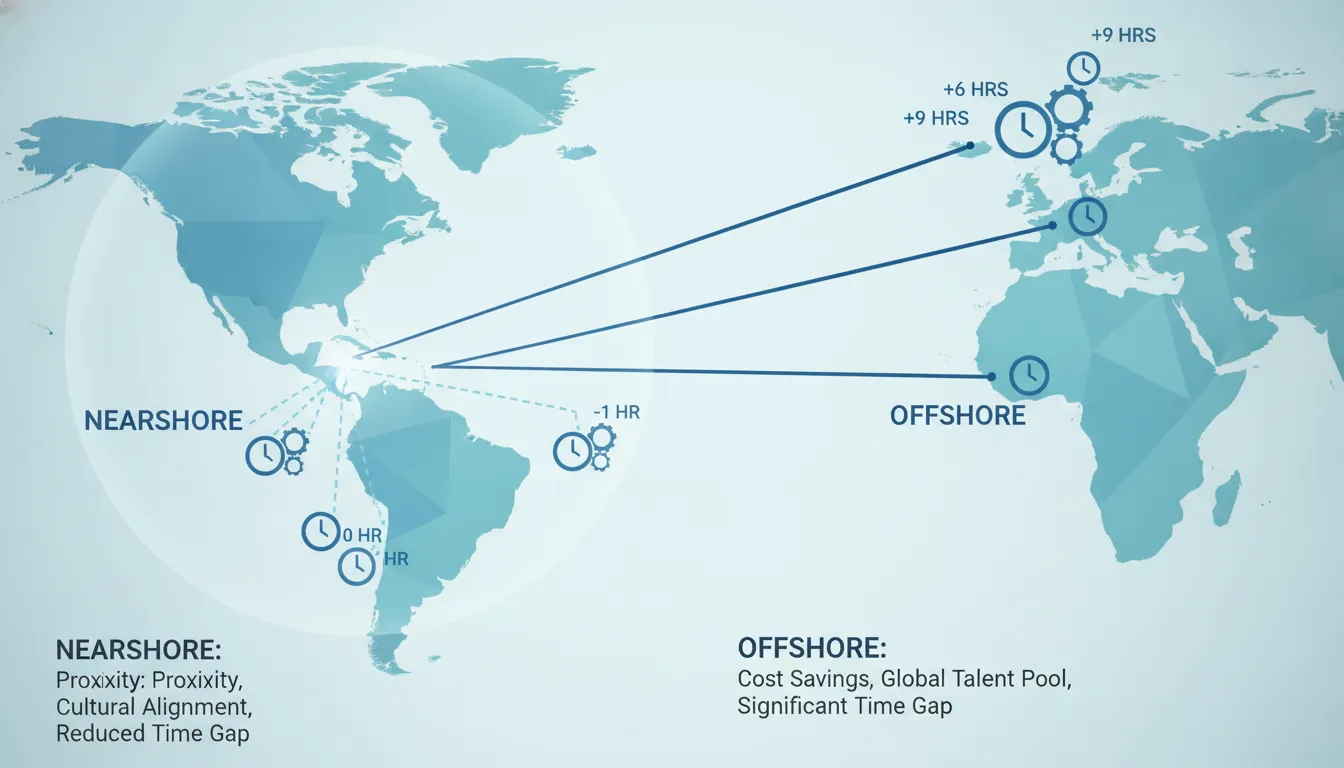
When companies build software, geography plays a big role in how well quality assurance works. Offshore testing teams seem like a good way to save money, but the long distance can slow down the work. In contrast, nearshore QA teams reduce project lead times and make teamwork much easier.
| Comparison Feature | Nearshore QA Teams | Offshore QA Teams |
|---|---|---|
| Time zone overlap | Full EST or CST overlap for daily work | Eight to twelve hours of time gap |
| Ramp-up speed | Fast two-week team setup | Slow six to ten weeks setup |
| Cost savings | Thirty to fifty percent savings versus US hiring | High savings but with hidden coordination costs |
| Communication quality | Real-time daily talk and live feedback | Delayed emails and slow replies |
| Cultural alignment | Close alignment with US work styles | Different work cultures and higher friction |
Time zones and daily work
Working in the same time zone helps teams solve bugs in real time. Offshore teams often work eight to twelve hours ahead or behind US clients, causing long wait times. With nearshore QA teams, engineers work during the same hours. They can hold daily stand-ups and fix bugs as they find them.
Ramp-up speed and team launch
Launching a new QA team should not take months. While traditional offshore firms take six to ten weeks to start, nearshore partners can launch a team in just two weeks. This quick start is vital for firms that want to scale nearshore software development services without losing time.
Cost savings and budget control
Firms often look offshore to save on costs, but hidden team needs can erase those savings. Dealing with time zone gaps and fixing bugs late adds to the bill. Hiring nearshore QA teams can save you thirty to fifty percent compared to hiring in the US. These savings are real because the teams work at the same time and do not need extra help.
How Nearshore QA Teams Accelerate FinTech Time-to-Market
FinTech firms work in a fast-paced world where software updates must be quick and safe. To keep up with high customer demands, tech leaders must find ways to launch features faster without losing quality. Many firms find that nearshore QA teams offer the right balance of speed and compliance.
Faster team onboarding and integration
A major roadblock in FinTech development is the time it takes to hire and train QA engineers. Offshore testing often takes weeks or months of training before an engineer can help. The industry average to set up a new QA team is about six to ten weeks. In contrast, a nearshore partner can set up a team in just two weeks, giving firms a strong edge in a fast-moving market.
Real-time sprints for quicker release cycles
FinTech apps need frequent updates to support new tools and stay secure. Working with teams in distant time zones makes daily teamwork hard. When QA engineers are twelve hours ahead, feedback is delayed by a full day. Nearshore teams solve this issue by working in the same time zones, cutting lead times and making syncing much faster. Studies show that nearshoring cuts lead times and improves cultural alignment for quick software development cycles.
With nearshore partners, your QA testers work side-by-side with your core team during normal business hours. This overlap helps in three key ways:
- Daily Stand-up Meetings: Testers sync with developers each morning to discuss open bugs and blocks.
- Direct Slack Chat: Teams can debug hard issues together without waiting for overnight emails.
- Fast Test Runs: QA runs test suites as soon as developers push new code, cutting down on idle time.
Ready to speed up your QA cycles? Contact Teravision to build your nearshore QA team in just two weeks.
How Do Nearshore QA Teams Handle Regulatory Compliance and Data Security?
FinTech firms must follow strict rules to protect private data. Standards like SOC 2, PCI DSS, and GDPR demand rigorous testing. Any small error can lead to big fines or lost trust. Because of these risks, FinTech firms must use strong testing plans. Working with dedicated nearshore QA teams helps firms meet these high standards without losing speed.
Securing data in financial software
Financial software deals with private user data every day. Testing must ensure that this data stays safe from leaks. Nearshore QA teams are skilled at finding security gaps before code goes live. They run deep checks on data encryption and access controls, keeping your products compliant with security laws while protecting your users from fraud.
The role of requirements engineering in compliance
Compliance begins with clear rules. In software projects, these rules are called requirements. Many outsourced projects fail because teams do not manage these rules well. A study on outsourced software development shows that requirements engineering issues are among the most common problems in these projects.
Nearshore QA teams solve this problem by working closely with your product owners. Because they share your workday, they can clarify rules in real time. They turn complex compliance laws into clear test cases, preventing the common requirements issues that plague offshore projects.
Cultural fit and clear communication
Compliance testing demands precise communication. Mistakes about rules can lead to security flaws. Nearshore teams offer strong English skills and cultural alignment. They understand the legal rules of Western markets. This shared background reduces mistakes during test planning and ensures that testers and developers stay on the same page. When you look for a partner, check their security habits. It is critical to vet nearshore service providers to see how they handle sensitive data.
The ROI of Nearshore QA: Cost Savings Without Compromising Quality
FinTech firms often struggle to balance cost and software quality. Building an in-house team is slow and costly. Offshore teams can be cheap, but time zone gaps and slow feedback delay your launch. Choosing nearshore software development services solves these issues.
Total cost of ownership models
When you look at the total cost, in-house QA teams carry high hidden expenses. You must pay for hiring, benefits, desks, and testing tools. Offshore teams seem cheaper at first, but time zone gaps and long distance delay feedback. A study on software lead times shows that long distance drives total costs. By hiring nearshore QA teams, FinTech firms get 30-50% cost savings compared to hiring in the US, without losing quality.
Sustaining quality with high retention
High team turnover is a major issue in offshore outsourcing. When tech staff leave, they take product knowledge with them. In contrast, Teravision has a 95%+ client retention rate. High retention means your nearshore QA teams keep deep knowledge of your software. You do not waste time or money on new training. Stable, long-term teams are better at learning complex rules and compliance needs, which is key for FinTech products where safety is vital.
Flexible scale without long-term locks
FinTech firms operate in a fast-paced market. Your testing needs can change quickly from month to month. Rigid contracts with old vendors make scaling hard. Teravision provides month-to-month hiring freedom. You can scale your team up or down based on your roadmap. This keeps your cash flow healthy while guarding your product quality.
AI-Augmented QA: The Next Frontier for FinTech Testing
FinTech development demands both speed and extreme precision. Today, AI-assisted testing tools make it easier to run tests and find bugs early. These smart tools increase test coverage and speed up feedback loops across all layers of the test pyramid. By using machine learning, modern QA practices can scan vast amounts of code in minutes.
Reducing false positives in compliance testing
FinTech firms must meet strict regulatory rules. Traditional automated testing often triggers too many false alarms, which slows down the launch of new features. Smart testing tools solve this by using historical data to predict which test failures are real bugs. By filtering out false alerts, QA experts can focus on true compliance issues.
The human role in AI-augmented testing
While AI tools offer great speed, they cannot replace human judgment. This is why we use AI to support, not replace, our manual testing efforts. Human testers have a deep understanding of user behavior and business logic that AI lacks. They can design creative test cases and explore edge cases that smart systems might miss. Our nearshore QA teams combine both methods to give you the best of both worlds. By combining smart test automation with manual checks, we help FinTech companies deploy with confidence.
Frequently Asked Questions
Why do FinTech companies choose nearshore QA teams over offshore options?
Nearshore QA teams work in the same time zones as US firms, mostly in Eastern or Central time. This allows real-time collaboration and faster feedback. Offshore teams often work half a day away, which causes long delays. As shown by research in PMC, cutting physical distance lowers lead times and helps team alignment.
How do nearshore QA teams handle strict data security and compliance?
Nearshore QA teams follow strict safety rules and local laws. They use secure environments and networks to protect client data. These teams often know US finance regulations well, including SOC 2, PCI DSS, and GDPR. Working in the same time zone allows them to address compliance questions in real time rather than waiting for overnight email replies.
What is the cost difference between nearshore and offshore QA?
Nearshore QA teams offer 30-50% cost savings compared to hiring in the US. While offshore teams may have lower hourly rates, hidden costs from communication delays, rework, and longer ramp-up times often erase those savings. Nearshore teams deliver better value when you factor in total cost of ownership.
How fast can a nearshore QA team be deployed?
Nearshore partners like Teravision can deploy a fully productive QA team in just two weeks. This is significantly faster than the industry standard of six to ten weeks for traditional outsourcing or the months needed to hire in-house. The quick ramp-up comes from pre-vetted talent pools and streamlined onboarding processes.
What compliance certifications should a nearshore QA provider have?
Look for providers with experience in SOC 2, PCI DSS, and GDPR frameworks. The best nearshore partners undergo regular third-party audits and maintain clear data handling policies. They should be able to demonstrate how their testing processes map to specific regulatory requirements for financial software.
Can nearshore QA teams work with existing agile workflows?
Yes. Nearshore QA teams are designed to integrate directly into your existing agile sprints. They join daily stand-ups, participate in sprint planning, and use your existing toolchain (Jira, Slack, CI/CD pipelines). Their time zone alignment means they are available for real-time collaboration throughout your entire workday.
Ready to transform your FinTech QA strategy? Book your discovery call today and deploy a nearshore QA team in just two weeks.